The Neuroscience of Choir Singing for Women: How High-Quality Group Singing Regulates the Vagus Nerve, Supports the Female Brain, and Enhances Wellbeing Across Every Life Stage

Updated: Jan 13
A Lifespan Wellbeing Perspective Informed by the Neuroscience of the Female Brain
(based on " The Woman's Brain Book: The Neuroscience of Health, Hormones and Happiness" - Dr Sarah McKay)
Before diving into the science, I want to share something personal. From childhood onward, singing has shaped my wellbeing in ways I didn’t fully understand until much later. As a young girl with asthma, I noticed something remarkable: whenever I sang—especially in my school and chamber choir — my breathing eased. The tightness in my chest softened, and the rhythm of singing felt like a natural, effortless therapy.

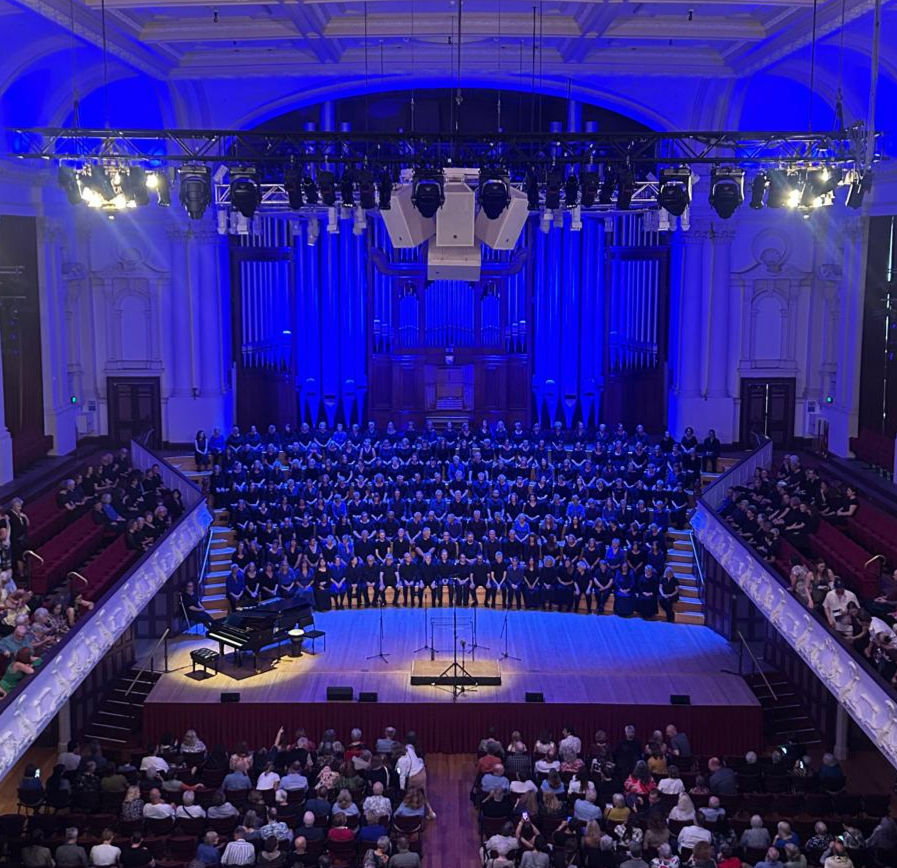
Many decades later, after moving to New Zealand and singing again as a young adult, the same thing happened. When I joined All Together Now (ATN) — a large, warm, high-standard Auckland community choir led by Kate Bell & Steven Rapana — the transformation happened again. Singing as a Soprano 1, with long sustained lines, precise breathwork, and beautifully blended harmonies, my breathing began to open in the same way it had when I was a child.
Scientific research now explains this:
singing improves respiratory muscle strength and thoracic mobility (Bonilha et al., 2009; Grape et al., 2003; Philip et al., 2020),
long, slow exhalations activate the vagus nerve, reducing bronchoconstriction (Lehrer & Gevirtz, 2014; Porges, 2011),
structured breathing regulates the autonomic nervous system (Huberman Lab, 2021–2024).
My lungs responded both times with more freedom, less tension, and deeper ease. With this personal lens, let’s explore the wider picture.
We don’t just sing — we regulate, connect, interpret and transform through song.
Across every life stage, choir singing acts as a powerful neuroscience-based wellbeing practice, engaging:
the vagus nerve,
hormonal regulation,
emotional circuits,
identity and resilience.
This blog integrates scientific research with Dr Sarah McKay’s work from The Women’s Brain Book to show why choir singing supports women:
through childhood,
puberty,
menstrual cycles,
pregnancy,
postpartum,
menopause,
older age.
…and yes, there is a short section for men too.
Childhood: Building the Foundations of the Female Brain
Childhood is a time of intense neural wiring. Girls develop strong social-brain networks early, including empathy, language, bonding and emotional processing (McKay, 2017).
Why choir matters in childhood:
strengthens auditory and language circuits (Patel, 2008),
supports vagal tone and emotional regulation (Porges, 2011),
builds confidence and reduces anxiety (Batt-Rawden & Andersen, 2020),
enhances belonging and identity (McKay, 2017).
Large-scale research confirms this:
The UK “Sing Up” Programme found improved confidence, language and wellbeing in children with regular singing (Welch et al., 2010).
A Finnish study showed children’s choirs enhanced emotional regulation, prosocial behaviour, and stress resilience (Eerola & Peltola, 2016).
In New Zealand, these benefits are visible in Diocesan School for Girls, St Cuthbert’s College, and Westlake Girls’ Cantare, where high standards, structured warm-ups and beautiful blend build identity, social awareness and emotional steadiness.
Puberty: Hormones, Emotions & Social Sensitivity

Puberty remodels the female brain. Oestrogen heightens:
emotional sensitivity,
social awareness,
stress reactivity.
The amygdala becomes more active, and belonging becomes critical (McKay, 2017).
Research shows choir:
reduces social anxiety (Tarr, Launay & Dunbar, 2014),
improves emotional regulation through synchronised breathing (Vickhoff et al., 2013),
strengthens self-esteem (Fancourt et al., 2019),
provides a stable peer group.
The top school choirs in 2025 in New Zealand like St Cecilia Singers (Diocesan School for Girls), St Cuthbert’s, Cantare (Westlake Girls High School) embody this — teen girls learn tuning, breath alignment, rhythmic unity and ensemble awareness, creating mastery and emotional grounding.
Menstrual Cycles: Autonomic Regulation & Emotional Clarity
Monthly hormonal shifts influence:
mood,
anxiety,
sleep,
irritability.
Choir singing stabilises this through:
breath regulation (Huberman, 2021–2024),
improved interoceptive accuracy (Barrett, 2017),
reduced cortisol (Good & Russo, 2021; Linnemann et al., 2017),
group synchrony.
At All Together Now, tuning chords, shaping vowels, and shared exhalation improve emotional clarity and physical steadiness across the cycle.
Pregnancy: Bonding, Breath & Brain Adaptation
Pregnancy transforms the brain toward empathy and bonding (McKay, 2017).
Choir singing during pregnancy:
reduces cortisol and stress (Wulff et al., 2020),
improves HRV (Fancourt & Perkins, 2018),
supports breathing and posture,
reduces isolation.
Weekly rehearsals can become emotional reset points.
Postpartum & Motherhood: Identity, Overwhelm & Co-Regulation
The postpartum period brings:
hormonal crashes,
sleep deprivation,
emotional overload,
identity shifts.
Research shows choir:
reduces postpartum depression (Fancourt et al., 2019),
increases oxytocin (Schladt et al., 2017),
restores identity,
provides community and co-regulation.
Breathing, harmony and belonging refill depleted reserves.
Perimenopause & Menopause: Autonomic Stability & Cognitive Support
Perimenopause brings:
fluctuating oestrogen,
sleep changes,
irritability,
autonomic instability.
Choir supports:
vagal tone (Porges, 2011),
reduced anxiety & stress markers (Good & Russo, 2021),
cognitive function in enriched environments (Johnson et al., 2020),
belonging and purpose.
At 'All Together Now' warm humour + high musical standards create emotional safety and stability. A beautifully tuned chord in rehearsal becomes a moment of deep regulation.
Older Age: Purpose, Cognition & Longevity
The aging female brain thrives on:
novelty,
learning,
social connection,
meaning.
Choir supports:
slower cognitive decline (Johnson et al., 2013; 2020),
enhanced memory and attention,
reduced loneliness,
respiratory strength,
purpose (Hill & Turiano, 2014).
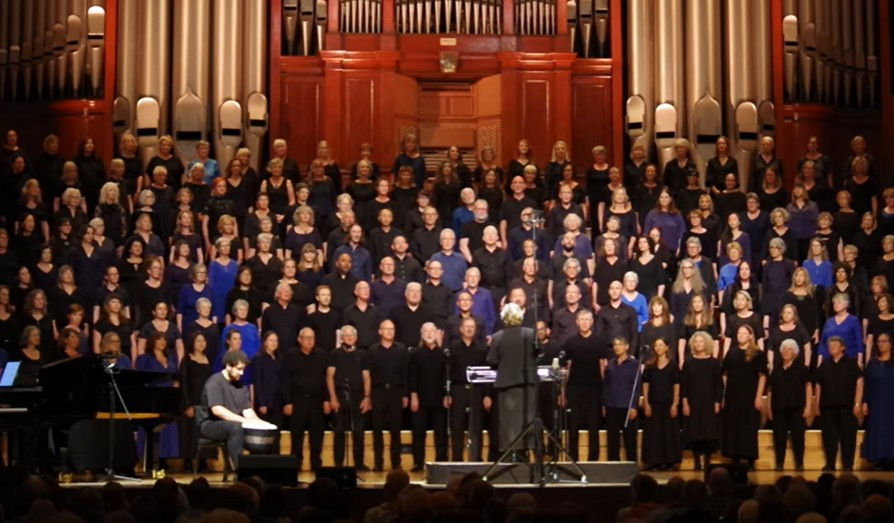
At All Together Now events — Town Hall Mixtape for the Mission, Franklin Road Christmas performances — older women shine. High musical standards keep both brain and breath youthfully engaged.

Why Women Benefit? Dr Sarah McKay’s Bottom-Up / Outside-In / Top-Down Model
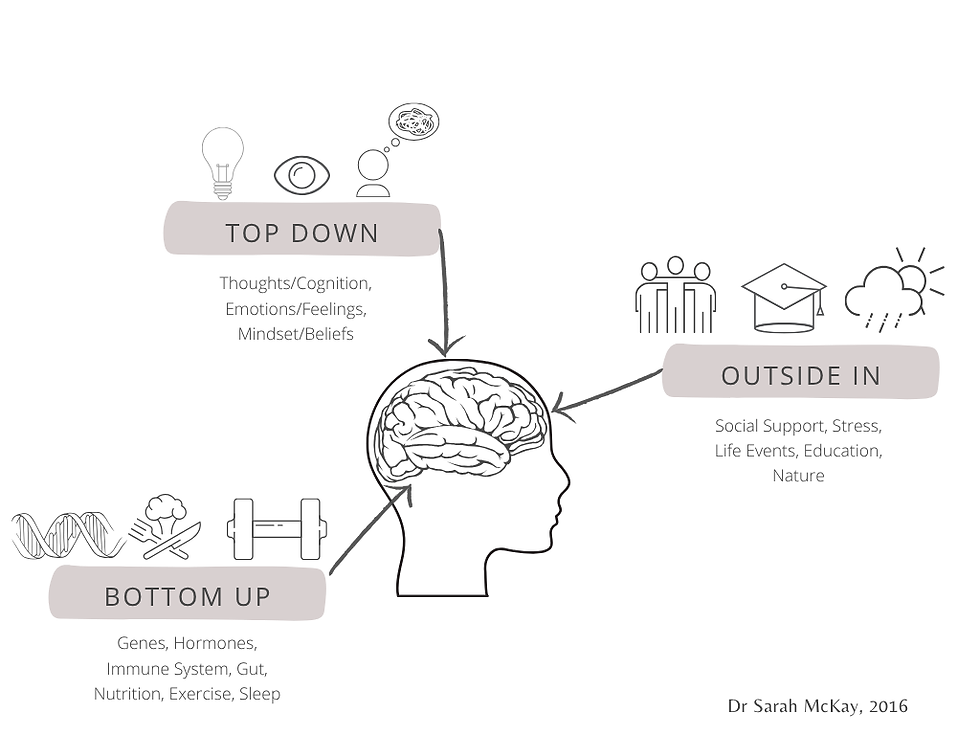
Choir activates all three pathways:
1. Bottom-Up (Body → Brain)
Breathwork,
Vagal stimulation,
Interoception.
2. Outside-In (Connection → Brain)
Kate & Steven provide warm, skilled, humorous leadership, creating safety and excellence.
3. Top-Down (Meaning → Emotions)
Purpose,
Identity,
Self-narrative.
Few activities engage all three. Choir does.
While this blog focuses on women, research shows men experience:
improved HRV (Gick, 2011),
reduced distress (Dingle et al., 2013),
emotional expression without stigma (Falconer, 2022; Hopper et al., 2016),
strengthened identity & purpose (Ørjasæter, 2017; Arquebau et al., 2024),
hormonal shifts (Bowling et al., 2022).
My Experience with ‘All Together Now’
Everything neuroscience describes, the ‘All Together Now’ choir delivers:
No auditions,
No judgement,
All ages welcome,
Great connections, laughter, and music,
High standards of singing and musical excellence.
Led by Kate Bell and Steven Rapana, the choir maintains a musically ambitious standard while staying open, inclusive, and joyful. Every rehearsal focuses on precision in breath, tone, blend, timing and harmony — yet the atmosphere is warm, encouraging, and deeply human.
The result? A safe, emotionally rich environment where breath, rhythm, and belonging naturally co-regulate the nervous system — the science of vagus-nerve regulation in real time.
You can learn more about our wonderful musical directors, Kate Bell and Steven Rapana, here: https://www.thechoir.co.nz/ourpeople
Purpose & Longevity: Singing for the Auckland City Mission
A beautiful part of singing with All Together Now is that our concerts, busking events, and iconic Franklin Road Christmas performances raise money for the Auckland City Mission.
Purpose is a major predictor of long-term wellbeing, Hill & Turiano (2014); Boyle et al. (2009); Steger (2012):
reduces risk of mortality,
protects cognitive function,
improves emotional health.
Serving others strengthens our own health. Purpose is biological medicine.

In Summary: Choir Helps Women Thrive at Every Age
Across the entire lifespan — from childhood to older age — choir singing supports:
breath,
heart,
nervous system,
hormones,
identity,
community,
meaning.
At All Together Now, we don’t just sing. We breathe together .We regulate together. We rise together.
We harmonise & we co-regulate. We become more ourselves — at every stage of life.
Breath synchronises — calming the vagus nerve,
Hearts align — building resilience & belonging,
Voices blend — strengthening the female brain,
Excellence focuses — creating emotional mastery,
Community holds us — through every transition.
Purpose, connection and joy supports longevity (Hill & Turiano, 2014).
At All Together Now, we don’t just sing. We breathe together .We regulate together. We rise together. We harmonise & we co-regulate.
Through singing with others at a high level we become more ourselves — at every stage of life.
Reference List
Arquebau, L., et al. (2024). Musical practice and male wellbeing.
Barrett, L. F. (2017). How Emotions Are Made.Barrett, L. F. (2020). Seven and a Half Lessons About the Brain.
Batt-Rawden, K., & Andersen, S. (2020). Choirs for wellbeing. Health Promotion International.
Bonilha, A. G., et al. (2009). Singing and respiratory health.
Bowling, D. L., et al. (2022). Hormonal changes during group singing.
Clift, S., & Hancox, G. (2010). Singing and respiratory wellbeing.
Dingle, G. A., et al. (2013). Group singing, wellbeing and distress.
Eerola, T., & Peltola, H. (2016). Children’s choirs, emotion and prosociality.
Falconer, C. J. (2022). Emotional expression in male singing groups.
Fancourt, D., & Perkins, R. (2018). Arts engagement and HRV.
Fancourt, D., Finn, S., Warran, K., & Wiseman, T. (2019). Choir and bereavement. BMJ Supportive & Palliative Care.
Gick, M. (2011). Singing and HRV: A review.
Good, A., & Russo, F. (2021). Mood, oxytocin & cortisol after singing. Psychology of Music.
Grape, C., et al. (2003). Singing, breathing & thoracic mobility.
Hill, P. L., & Turiano, N. (2014). Purpose and longevity.
Hopper, L., et al. (2016). Masculinity and group singing.
Huberman Lab (2021–2024). Breathwork, vagus nerve & stress.
Johnson, J. K., et al. (2013). Choir and aging cognition.Johnson, J. K., et al. (2020). Enriched environments & cognitive reserve.
Lehrer, P., & Gevirtz, R. (2014). HRV biofeedback & breath.
Linnemann, A., et al. (2017). Choir singing & stress.
McKay, S. (2017). The Women’s Brain Book.
McFerran, K. (2013). Adolescents and music therapy.
Ørjasæter, A. (2017). Masculinity, identity & choral practice.
Patel, A. (2008). Music, Language and the Brain.
Pearce, E., et al. (2015). Choir and adolescent social bonding.
Philip, K. E., et al. (2020). Singing and respiratory coordination.
Porges, S. (2011). The Polyvagal Theory.
Schäfer, T. (2023). Online group singing and psychophysiology.
Schladt, T., et al. (2017). Oxytocin & singing.
Su, Y., et al. (2025). Choir mastery & wellbeing.
Tarr, B., Launay, J., & Dunbar, R. (2014). Synchrony and bonding.
Vickhoff, B., et al. (2013). Choir singing & HRV synchrony.
Welch, G. et al. (2010). Sing Up Programme.
Wulff, V., et al. (2020). Singing during pregnancy.


Comments